Photo: XR Medellin
Dear rebel,
Extinction Rebellion’s Eighth Value is to avoid blaming and shaming. In other words, “We live in a toxic system, but no one individual is to blame.” Our core demands are of changes that need to be made by those in power. Because of this, some say that XR believes the majority of people have no responsibility regarding the climate crisis, and that we expect governments and corporations to do the right thing all on their own.
We would like to set the record straight on this. To avoid blaming and shaming does not mean condoning the use of fossil fuels or rampant consumerism. It means understanding that not everyone has the money to buy an EV or the flexibility to ride their bike to work. It means lending a hand instead of pointing a finger. It means turning towards community instead of division.
If XR members felt no personal responsibility, there would be no reason for this newsletter. Instead, you’ll see that people across the globe are choosing to stand together in the streets of their home towns and demand the changes that those with power are resisting. You’ll see Ecuadorians celebrating the power of their own voices, and Peruvians defending their land. You’ll see citizens voting in local politicians who will defend our ecosystems, and calling out those who do not. You’ll have the chance to read XR Global Support’s brand-new guide on survival, resilience, and community. And we hope you will feel inspired, in the words of our Eighth Value, to “embrace change that creates unity in diversity.”
This newsletter is brought to you by XR Global Support, a worldwide network of rebels who help our movement grow and need money to continue this crucial work.
BEST HOLIDAY GIFT EVER: A LIVEABLE PLANET
Action Highlight
Vozes de la Selva - Voices from the Jungle
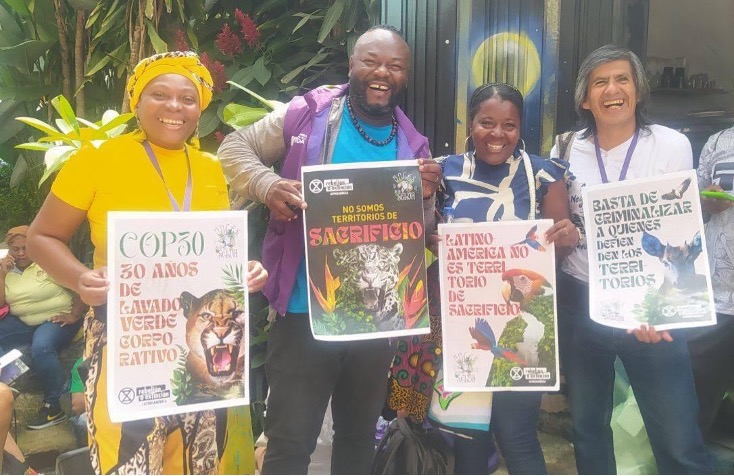
Photo: XR Medellin
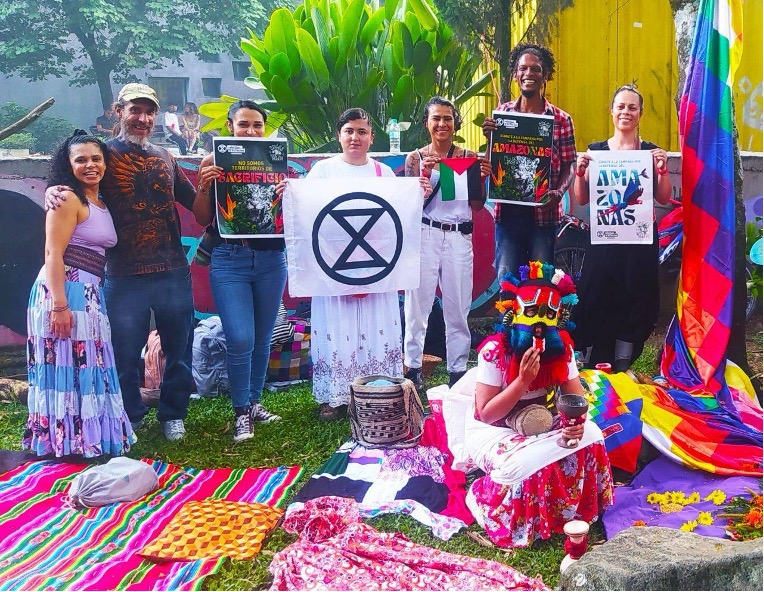
The 30th Conference of the Parties (COP) was controversial even before it began. True to form, COP30 was promoted to be a beacon of climate cooperation, however it turned out to be a largely divisive event. For months, a powerful wave of resistance has been building across Latin America as Indigenous communities and frontline groups unite with XR under the banner “Vozes de la Selva” to demand that their voices be placed at the center of all climate decisions. River flotillas in the Andes in Ecuador, youth-led climate carnivals in Chile, road blockades in Colombia and Peru, and local communities marching through the COP30 venue are all bold examples of actions united by shared demands for real climate justice. And even with COP30 now over, the movement hasn’t slowed. Actions continue across the region with more already planned for the months ahead. A reminder for us all: Real climate justice cannot happen without the people who protect the land.
November, 2025 | Bolivia
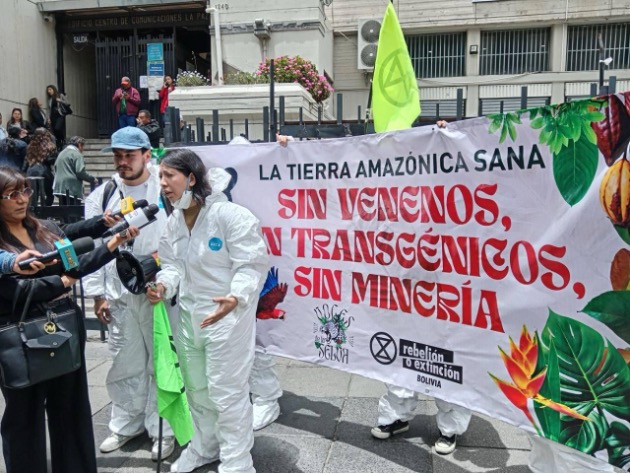
Photo: XR Bolivia
Once again, the people find themselves betrayed by a government that hides destruction behind the false promise of “development,” sacrificing lives and territories for the benefit of powerful interests. In mid-November, rebels in Bolivia joined members of more than sixty other organizations to launch a non-violent national action in defense of what should never be under threat: the constitutional right to a healthy environment.
But the Bolivian government is trying to merge the MMAyA (Ministry of Environment and Water) with Rural Planning, while insisting on keeping Oscar Mario Justiniano as the head of environmental policy. Justiniano is openly tied to aggribusiness and deforestation. And so rebels walked through the streets of La Paz carrying posters and displaying a symbolic “buffet” of local produce, each item pierced with empty syringes to illustrate the unnatural and harmful agricultural methods that could soon become a reality for Bolivians. They also held a peaceful protest outside the Ministry of Economy and Finance, offering fruit to the guards as a gesture of unity. More actions are planned. Even in the face of uncertainty, Bolivia’s people stand united in protecting their environment, knowing their future is inseparable from the land. Follow XR Bolivia here.
November 2025 | Amazon, Peru
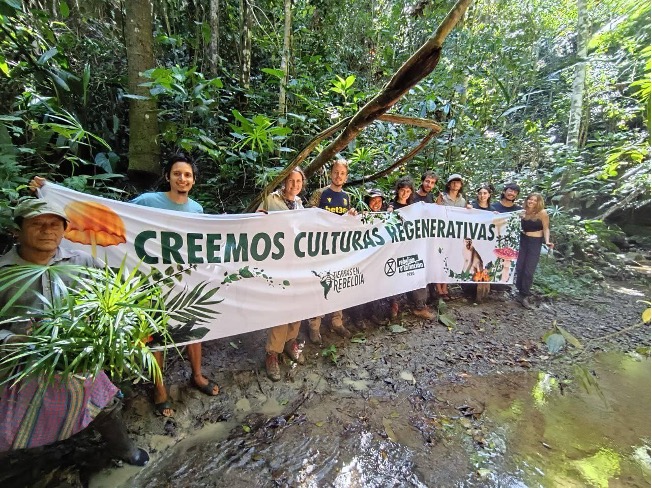
Photo: XR Peru
In recent weeks, Extinction Rebellion Peru (XR Peru) has drawn renewed attention to the mounting crisis faced by Indigenous communities in the Peruvian Amazon. Through their initiative titled Voces de la Selva “Voices from the Jungle”, XR Peru spotlighted stories from communities in regions such as San Martín and Loreto, places under severe pressure from land grabs, extractive activities, and the expansion of industrial monocultures like oil-palm plantations. In a recent Instagram post, the group urged broader audiences to hear the perspectives of Indigenous leaders, elders, and local people who view the forest not as a resource to exploit but as a living network that sustains their cultures, livelihoods, and identities.
This action matters because the stakes are enormous. Over the past decade, the relentless spread of oil-palm agriculture across the Amazon has driven widespread deforestation, degraded ecosystems, and displaced whole communities. In many areas, including the traditional territories of Indigenous communities, old-growth rainforest has been destroyed to make room for plantations, often with little regard for the rights of those who lived there for generations, often with little regard for the law.
For Indigenous and traditional communities, the forest is the source of food, water, medicine, cultural identity, memory, and spiritual connection to their ancestors. The loss of forest translates into the loss of livelihoods, ancestral knowledge, and biodiversity, as well as disruption to social and spiritual bonds passed down through generations. XR Peru’s “Voices from the Jungle” highlights exactly this: the forest does not need to be urbanized; it needs to be understood. XR Peru’s action raises Indigenous voices by sharing firsthand testimonies and reframing the narrative about “development”, contributing to a vital movement of resistance and solidarity.
November 2025 | Medellin, Colombia
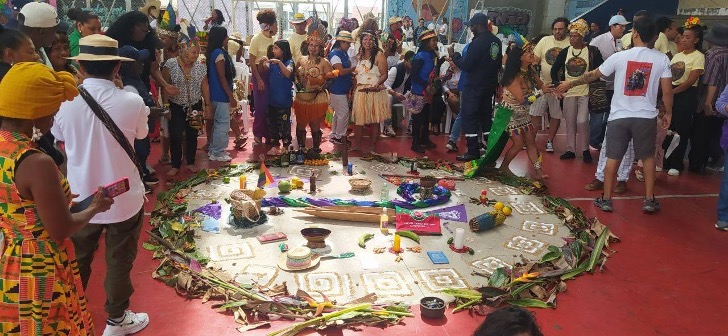
Photo: XR Medellin
In Medellín on November 8th 2025, Extinction Rebellion Colombia (XR Colombia), together with local supporters, celebrated a moving event described as a “Celebration of Life and Song to the Water". Through ritual, music, and gathering, the event aimed to re-affirm water as sacred, vital, and communal, countering the view of water as mere commodity, resource, or infrastructure. The gathering served as both a symbolic gesture and a call to protect water and ecosystems, honouring the deep connection between people, nature and the future of life. This resonates with a broader ethos within XR: waterways are not passive resources but living relationships deserving care. Just days later, from November 20th to 22nd, XR Colombia’s efforts intersected with a landmark national event: the Congreso Internacional de Gobernanza Cultural para la Paz: Voces Trenzando Territorios in Cali. This congress brought together over 600 representatives from communities, social and cultural organisations, public institutions, and academia. Its purpose was to build a new framework for cultural governance, democracy, and peace in Colombia which is rooted in the diversity of communal cultures and popular expression.
During those days in Cali, participants engaged in dialogues, artistic exchanges, community-led workshops, and territorial mobilisations under themes such as listening, building collective identity, and mobilising for cultural rights. The outcome will include a national pact, also known as a “Manifiesto Nacional por las Culturas Populares, los Derechos Culturales y la Gobernanza Cultural”, intended to shape public policy and recognise cultural communities as central actors in Colombia’s future. XR Colombia’s participation and alignment with this congress signal a powerful recognition emphasising that environmental and climate justice cannot be separated from cultural justice, community memory, identity, and social inclusion. Colombia continues to grapple with environmental degradation, water insecurity, and historic inequalities linked to cultural marginalisation. Actions like these help shift dominant narratives from extractive and exploitative approaches to ones rooted in respect for life, community, memory and inclusivity.
Action Update
November, 2025 | Ecuador
Following on from our report in last month’s newsletter, XR rebels in Ecuador are celebrating a major victory as the public voted overwhelmingly against the installation of foreign military bases and a change to Ecuador's Constitution. President Noboa’s proposal to establish a US base on the Galapagos Islands alarmed environmentalists, as the archipelago is home to more than 20% of the world’s biodiversity. Many feared that a change to the Constitution would have allowed increased extractivism. Ecuador was the first nation in the world to recognise nature as having rights, as declared in its 2008 constitution. However, economic reliance on the mining of gold, copper, and oil means that environmentally sensitive areas and Indigenous territories are still endangered. To modify the constitution would have been a significant step backward when our earth is begging for a step forward.
XReadiness - Creating Community Now
The last thing anyone needs now is paranoid prepping and doom-laden warnings. That’s why a group of rebels from all over the world came together to create a different kind of guide. We noticed a lot of government materials that encouraged emergency preparedness, but then left out most of the details about what that actually means. And we saw lots of prepper websites that assumed whatever happens, you’ll be alone in your private bunker eating canned peaches. None of that is very helpful for most people (if you have a bunker, this isn’t for you). Of course we’re also worried about living through the climate crisis and the other emergency situations that may arise from it, but we see this as a time to get ready by building community now —for before the crisis and for after the crisis, when we want to rebuild differently and so much better.
With these goals, we created a manual that is practical and aims to help people actually prepare for whatever might be coming by including simple, actionable and adaptable checklists that individuals, families and groups can use to be more prepared every day. The components are all available FREE to read on the website and also to download for free. Printed packs are also available to order (great gift idea!). And you can learn more about the project here.
Positive News
After Jamaica’s Disastrous Storm, Solar Power Is a Bright Spot
In late October, Hurricane Melissa devastated Jamaica. In the wake of the disaster, electricity was not available across much of the island nation due to downed and damaged powerlines. But some residents found themselves lucky. Many Jamaicans with solar panels had electricity immediately after the storm and were able to support their neighbors by offering spaces to store perishable food and medicine and the opportunity to call loved ones. In a hurricane-prone nation, solar energy is increasing communities’ resiliency to storms like Hurricane Melissa. Read the full story here and learn more about relief efforts here.
Dispatch from a City Near You
C40 represents a coalition of 97 cities - nearly a billion people - all around the world that are working to reduce fossil fuels emissions 50% by 2030, to build climate resilience, and to advance justice in climate action. C40 works to help cities set and achieve ambitious climate goals. In places like the United States, which currently has a federal administration that is hostile towards climate action, networks like C40 provide a useful space for cities to work to reach critical climate goals. Recent sub-national elections in the United States show that many states and cities there are serious about mitigating climate harms. Find out more here.
Humans of XR

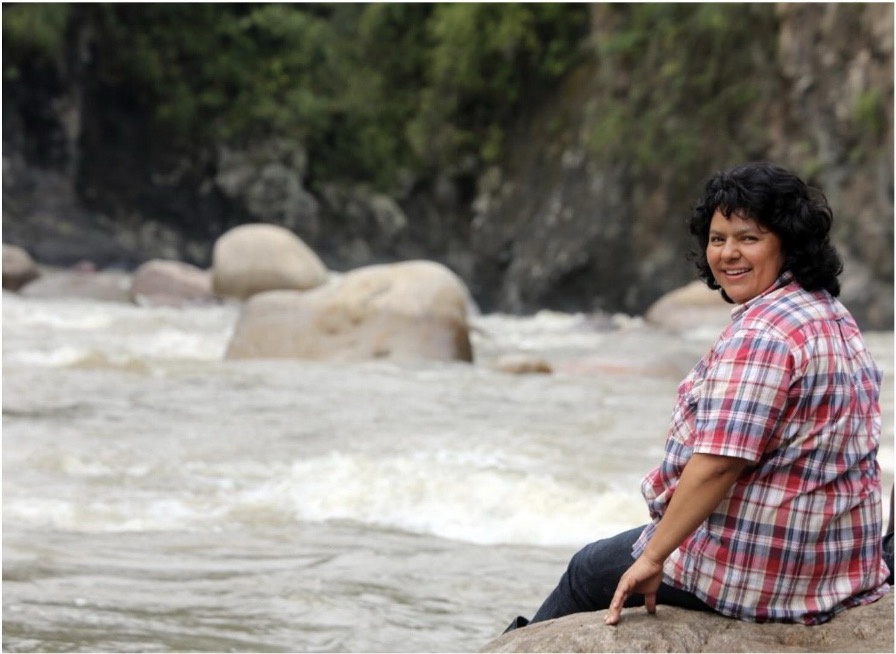
Berta Cáceres was a Honduran land rights activist from the Lenca people who was murdered in 2016 by forces behind a controversial hydroelectric project she opposed. Born in 1971 in La Esperanza – a rural town, the highest in Honduras – Berta inherited a strong sense of social justice and solidarity from her midwife mother and was already politically active as a teenager. While at university, in her early 20s, she co-founded the Council of Popular and Indigenous Organizations of Honduras (COPINH) to oppose illegal logging and government-backed extractive projects, including mines and hydroelectric dams on environmentally sensitive or sacred Lenca territory.
Her passionate commitment to protecting the land and Indigenous rights was rooted in her lived experience and a sense of community survival and dignity, rather than abstract ecological theory. Following a US-backedmilitary coup in 2009, violence against activists in Honduras increased dramatically – especially towards Indigenous people. Courts twice issued warrants for Cáceres’ arrest, and she was forced into hiding for long periods. Despite the strain on her family life, the mother of four always held up motherhood as a source of strength, rather than a barrier to her political work.
The highest-profile campaign she led was against the Agua Zarca mega-dam on the Gualcarque River. It would have been Central America’s biggest hydropower project, choking off the local community’s main source of irrigation and drinking water. After years of peaceful protests had no effect, activists occupied the construction site in 2013. This drew massive media attention and finally forced international engineering companies and investors to withdraw from the project, citing concerns over human rights violations.
In 2015 Cáceres won the Goldman Environmental Prize, the “Green Nobel” honouring grassroots activists around the world. She famously said “We must undertake the struggle … wherever we may be, because we have no other spare or replacement planet. We have only this one, and we have to take action".
She always knew how dangerous her work was, and in March of 2016 she was murdered. While tributes poured in, her killing also sparked global outrage, culminating in the conviction of the gunmen and exposing how powerful corporate and political interests are complicit in the criminalization of activists and the suppression of human rights. Berta Cáceres is remembered as a fearless defender whose heroism continues to inspire rebels around the world today.
Must Watch
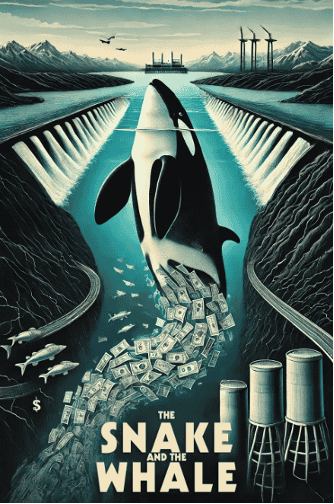
Image: The Snake and the Whale
This engrossing 98 minute documentary is about a problem that humans created and the refusal by a small, powerful minority to fix it. The film unfolds slowly, following the investigation by journalist and director John Carlos Frey, and becomes increasingly enraging and heart-breakingly tragic. The Southern Resident Orcas of the Pacific Northwest feed on salmon but they are starving to death because the salmon population has been decimated by four dams on the Lower Snake River. This issue is ongoing, and multiple local organizationsincluding Indigenous groups are working to shed light on the imminent yet preventable extinction of these killer whales. The film profiles inspiring individuals who have given their lives to studying and defending the whales. These experts realized that the problem was far upstream and have worked tirelessly to understand the complexities of dams, rivers, hydro power, and salmon life cycles. This award-winning film should help the plight of the orcas reach a wider audience and increase pressure on local politicians to remove the dams. Not yet in wide release, it is being screened around the world. Follow here for updates.
Worth a Second Look

How to stop funding fossil fuels by moving to an ethical bank
As we continue in our quest to create more awareness of banks funding fossil fuels, we’re digging up a blog post from the archives from 2020. Five years on, this article is truer than ever, revealing just how entrenched financial institutions remain in supporting industries that drive the climate crisis. The article exposes how most banks openly fund fossil fuels and calls on people to take control of their money. It urges switching to ethical banks that invest in renewable energy and sustainable projects, offering a bold five-step guide to make a real difference.
Rebel with your wallet
Forward this newsletter to a friend. If this was forwarded to you, join us and subscribe to the XR Global Newsletter. If you have any questions or feedback, we want to hear from you. Get in touch at xr-newsletter@protonmail.com. Follow us on your favourite platform!
P.S. Looking for a sustainable holiday gift? Make a donation to help power the rebellion!