Image: XR Gambia
Dear rebel,
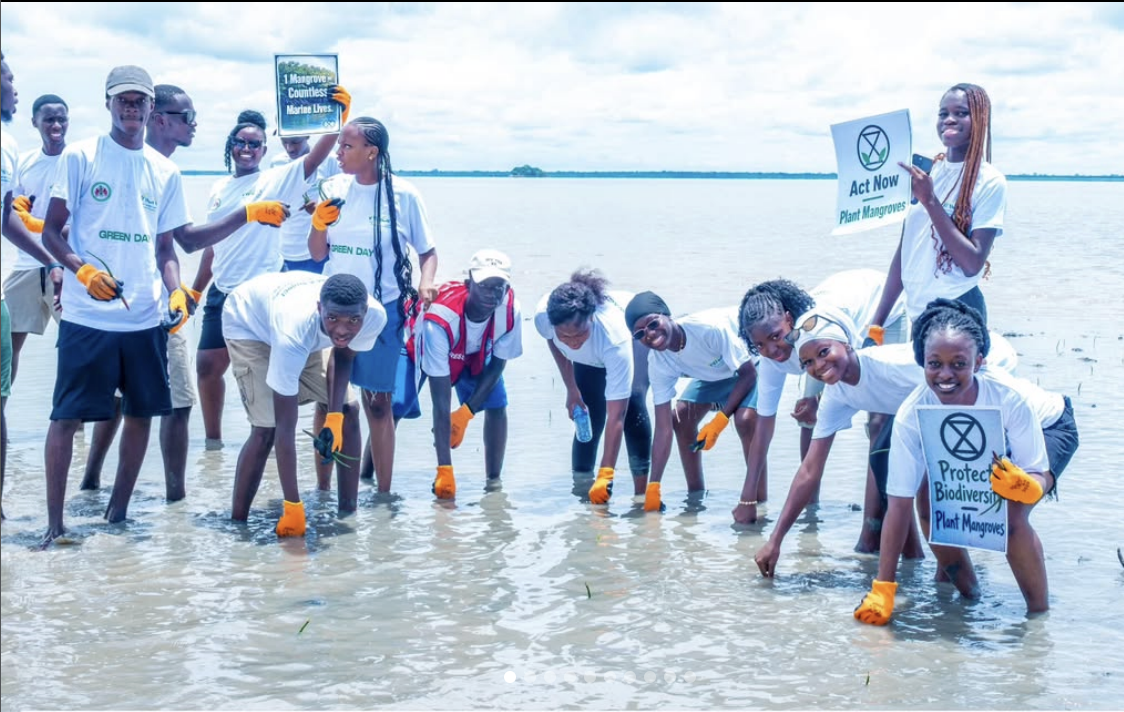
In certain circles, hope gets a bad rap. It’s a naive emotion, a foolishness, a refusal to accept reality. But hope can be the switch that turns anger into action. Insisting on hope when things feel bleak can be the ultimate resistance, our true rebellion. The world is certainly hopeful that the American midterm state and federal elections will signal an inflection point for climate action and many are working hard to turn their hope into results. Meanwhile, Naomi Klein and Astra Taylor urge us not to just accept end times fascism. Perhaps there would be more hope if we talked more about the capacity of the earth to heal itself, as Benedict Cumberbatch does in his new climate documentary. And we have the example of the Extinction Rebellion students on the front lines in Gambia and DRC, leading by example and just keeping on showing up and doing the work, putting hope into practice.
This newsletter is brought to you by XR Global Support, a worldwide network of rebels who help our movement grow and need money to continue this crucial work.
Action Highlight
September, 2026 | DRC
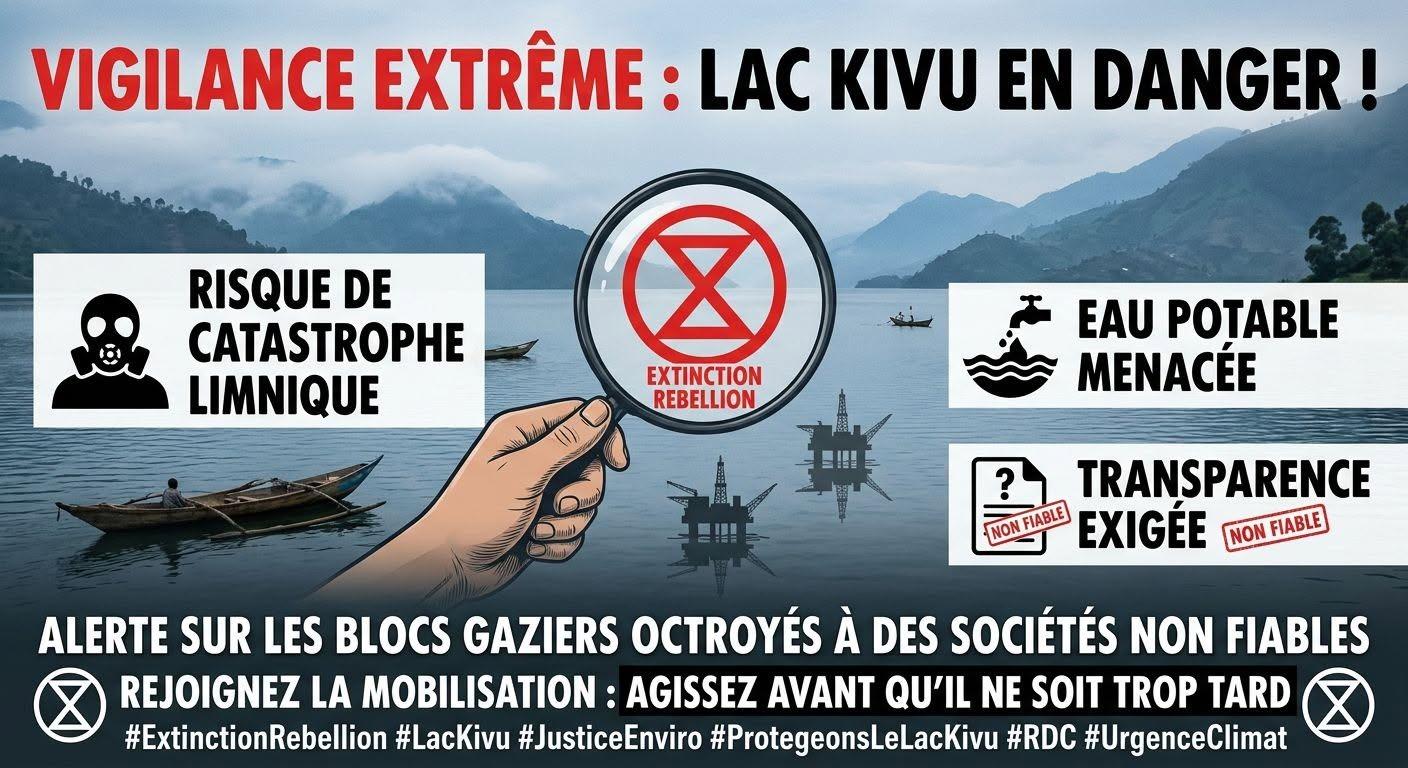
Image: XR Université de Goma
An Environmental and Public Health Emergency in Lake Kivu
One of Africa’s Great Lakes, Lake Kivu, lies on the border between the Democratic Republic of the Congo (DRC) and Rwanda. It covers around 2,700 km² and millions of people depend on this vital ecosystem for their water, food, and livelihood. But its deep waters also contain vast quantities of dissolved methane and carbon dioxide. Under certain conditions, these gases can be released in a deadly, asphyxiating cloud, a natural disaster called a limnic eruption that can only occur at three lakes in the world, including Lake Kivu.
The DRC government awarded gas-exploration concessions in three areas of Lake Kivu to companies whose technical qualifications and environmental safeguards have been questioned, and there are concerns about the lack of transparency around how the companies were selected. If extraction is poorly managed, it could contaminate drinking water, devastate fisheries, or even trigger a deadly eruption of gas. Campaigners are calling for independent environmental impact assessments and meaningful community consultation before extraction goes ahead. Follow XR Université de Goma here.
Action Update
21 September, 2026 | XR Gambia
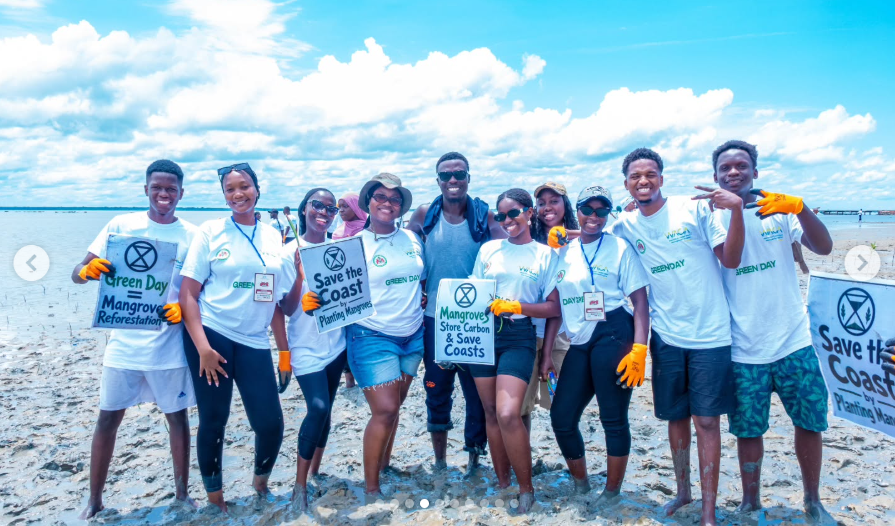
Photo: XR Gambia
Mangroves for Life
Mangroves are seriously underrated, and the XR Gambia Mangrove Restoration Project is working to change that. The project is dedicated to protecting these wetlands because they do so much for Gambia. Mangroves are shrubs and trees that can withstand salt water. They grow in dense thickets or forests along the tidal edges of coastlines near the equator. They help guard the coastline from erosion and keep local waterways clean, and they support the families and communities who rely on them for their livelihoods. They’re also “blue carbon” champions, drawing carbon out of the air and tucking it away in their roots and the waterlogged soil below, where it can stay stored for centuries. That makes mangroves one of our best natural allies in the fight against climate change. But they’re slowly fading away. Over the last 15 years, mangrove cover has shrunk by an average of 1.5% each year, mostly because of climate pressure and unsustainable wood harvesting. Every mangrove protected makes for a stronger defense against climate change. Follow XR Gambia here.
Positive News
MOOCs on Climate Change
Massive Open Online Courses (or MOOCs) began in 2008 with the idea that universities could share their knowledge for free with the world through the internet. Students of any age could keep learning, no matter where they were. Nearly 20 years on, MOOCs are still finding learners, and for anyone interested in understanding more about the climate crisis in general or specific aspects of the environmental challenges we face, MOOCs are a very accessible option. Now, all courses on climate change are available in one spot. Options range from 15 minute mini courses to a full semester. Dive in here.
Must Read: End Times Fascism
Naomi Klein and Astra Taylor: End Times Fascism | The Guardian
What happens when those with the most power stop trying to build a better future and start preparing to escape a collapsing one?
In this thought-provoking Guardian video about their new book, End Times Fascism, Naomi Klein and Astra Taylor explore the rise of what they call “end times fascism”, a politics shaped by climate crisis, growing inequality, and technological disruption, as well as the belief that only a chosen few deserve to survive when the world is in crisis. Klein and Taylor challenge the growing acceptance of collapse as inevitable while asking people to look closely at the systems of power, wealth, and exclusion that determine who is protected and who is left behind. This is also a call to action. The future does not have to belong to those building bunkers and escape routes; it can belong to those fighting for a future that is shared, just, and worth living in. If you care about climate justice, democracy, and protecting our living world, this is one to read, watch, and sit with.
This Month's Suggested Action
We know not everyone who wants to help is in a position to join XR, and not everyone knows how to find other ways to get involved either. So, every issue, we like to suggest a simple activity just about everyone can use to get started—but these aren't just small lifestyle shifts, like recycling. They are steps to take that could lead to making a huge difference, if you follow the path far enough.
This issue, our suggestion is to find a local pollution problem and do something about it.
If your family or other families in your community are suffering medical problems that you think may be pollution-related, your first step (after a doctor!) is to contact local public health officials, such as the water department, to find out what they test for and what recent results for local air and water have been. If nobody has been testing for the specific substances making you sick, keep looking for information. Find out (through social media, perhaps) who else in your community is having similar problems and work together. Find out what the relevant environmental laws are. Take the problem to the relevant regulatory body or to your government representative. If you can't get anyone to take you seriously, go to the media. Don't stop until you get the problem addressed.
This type of pollution is not exactly the same issue as climate change, but they are related, the “bad guys” are often the same, and the things you learn and the relationships you build will prepare you for any kind of environmental justice fight in the future.
Film Review: How to Live on Earth
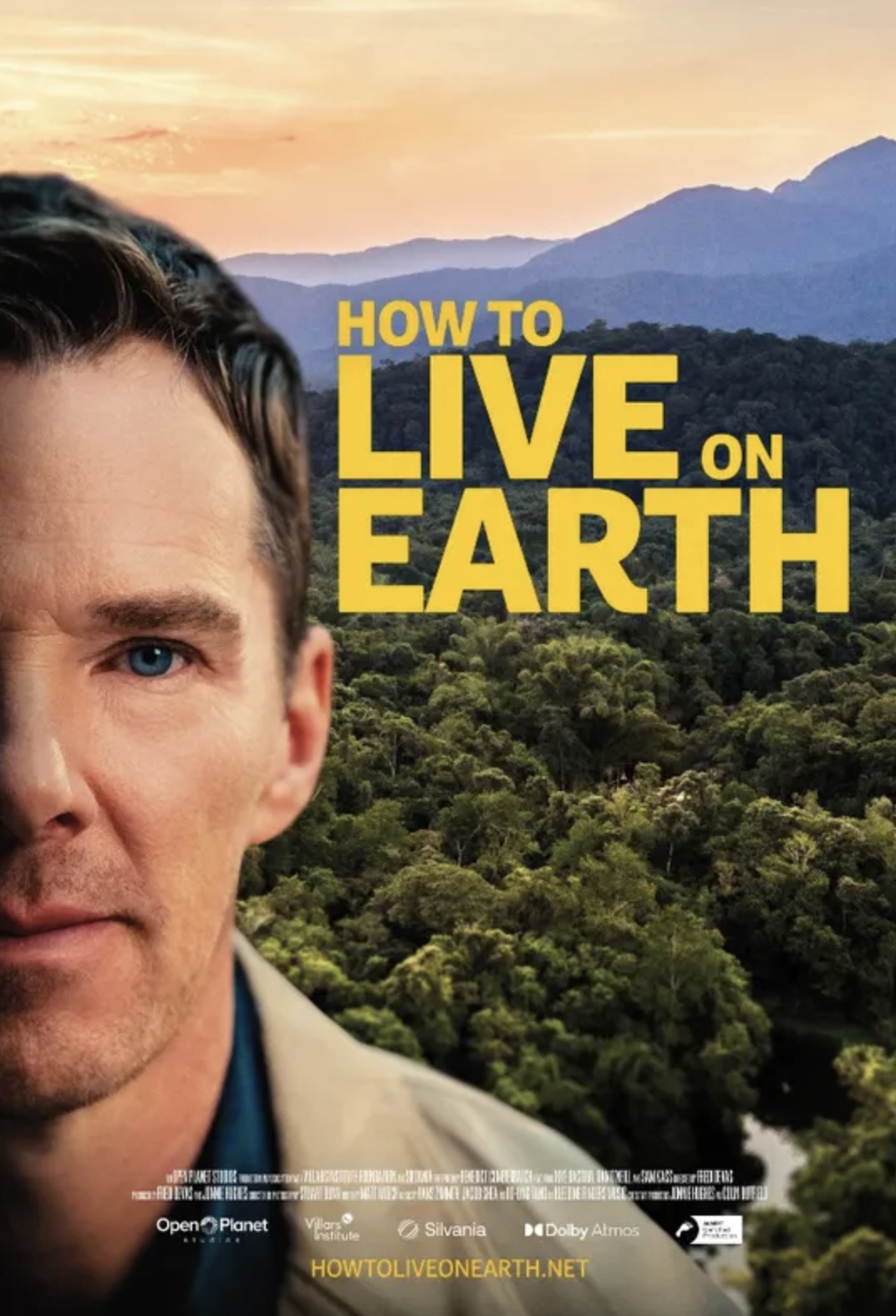
British actor Benedict Cumberbatch has long been a supporter of environmental issues. He mentions participating in the 2019 Extinction Rebellion protests in a recent Guardian interview to promote his new climate documentary, How to Live on Earth. The film is an hour and a half long and beautifully shot with scenes from 10 countries, but the credits don’t include a writer which may be why the parts don’t completely make a whole. The focus is on climate projects and the people making them happen around the world. Some of the projects are compelling and some of the people are compelling. For knowledgeable climate viewers, the tone may feel overly simplistic at times. However, for anyone needing a shot of optimism, one of the through themes is that the earth knows exactly what to do in order to heal itself, if humans would just get out of the way. The story of the 400 km long Klamath River is a powerful one and, to his credit, director Fredi Devas gets out of the way and lets the river’s Indigenous defenders explain their work to heal the river and what that means both for the river’s ecosystem and their community. Available free on YouTube.
Must Watch
The good folks at Yale Climate Connections spoke to the organizers of the New York Climate Film Festival and got their best recommendations for 7 climate films to binge-watch next weekend. While all the films are full length, they vary widely in theme and genre so there is something for everyone: documentaries, blockbusters, one animated movie, and a few obscure gems. They are also on a variety of platforms. Two are even available free on YouTube. As the days get shorter, catch a few of these inspiring movies.
Readers!
We’d like to hear from you! Please email us at: xr-newsletter@protonmail.com. Forward this newsletter to a friend. If this was forwarded to you, join us and subscribe to the XR Global Newsletter. If you have any questions or feedback, we want to hear from you. Get in touch at xr-newsletter@protonmail.com
P.S. Want to take action?Make a donation to help power the rebellion!