Dear rebel,
These days the word “war” is tossed around nearly as casually and as often as “lunch.” An idea that should be alarming has lost its impact simply because of how widespread armed conflict has become in our news cycles. Similarly, terms like “genocide,” “climate crisis,” and “extinction” have also lost their weight. What we often forget when disasters multiply is that they are likely connected. The extraction of oil is often accomplished by violence, and the ensuing wars use more fossil fuel, which degrades the climate and harms citizens, and so a cycle is created. What seems like a myriad of disasters is in fact one vast, interconnected, systemic crisis.
So what do we do with that? What do we do in the face of a sorrow so enormous we sometimes can’t even feel it? Perhaps simply acknowledging the complexity is one place to start. Perhaps when we hear what politicians are doing, we will remember that their actions impact average citizens. Perhaps we will acknowledge that discussions of oil prices and fossil fuel use aren’t a way of ignoring those citizen lives, but of trying to find a way towards a better future for all of us. Discussing one part of a crisis is a way of approaching it and understanding it, not ignoring all its other parts.
It also means that any issue you choose to act on has more of an impact than you might think. If you are a climate activist, you are also a human rights activist and a political activist and more. Just like how XR groups in the DRC, the UK, and the Netherlands, all organizing actions around local issues, are really working together to create a global movement.
The important thing is to act. If you’re wondering how to start, read on.
This newsletter is brought to you by XR Global Support, a worldwide network of rebels who help our movement grow and need money to continue this crucial work.
XR GLOBAL CLIMATE JUSTICE CAMPAIGN
Action Highlight
February 2026 | XR Beni DRC
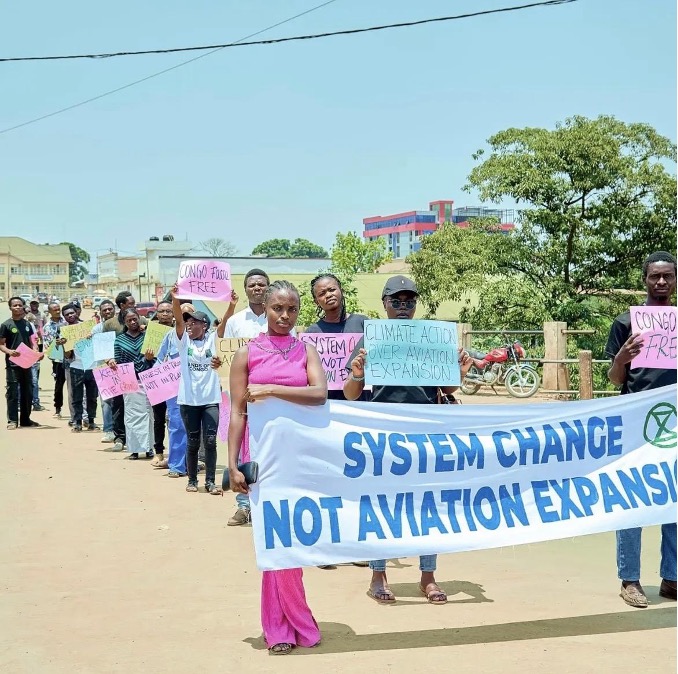
Photo: XR Beni
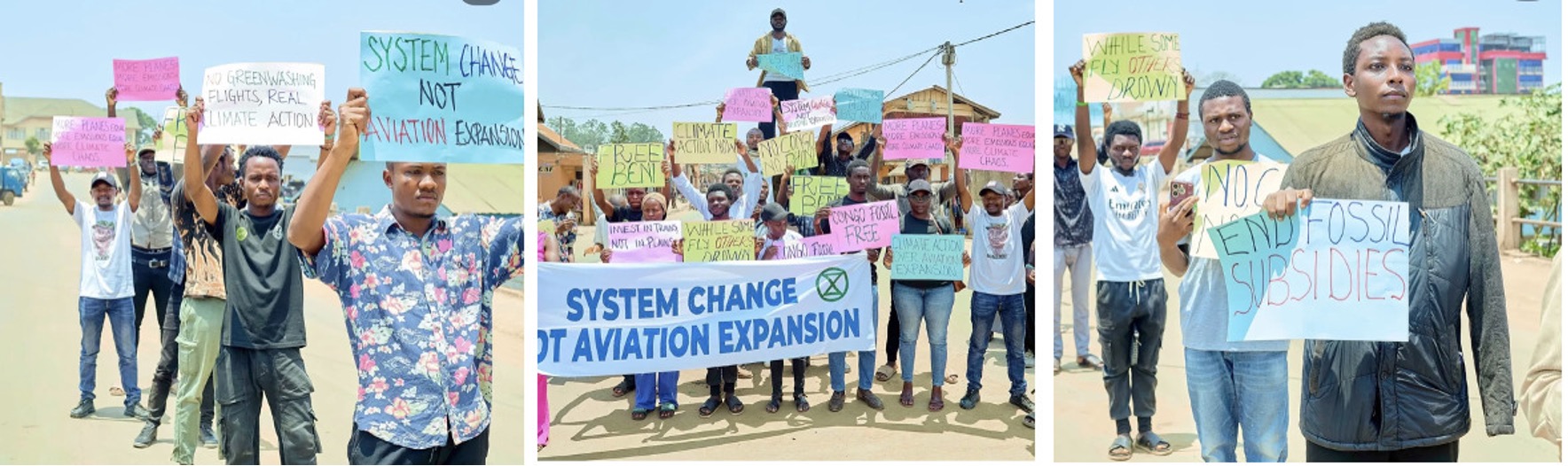
On 26 February 2026, members of Extinction Rebellion Beni (XR Beni) in the Democratic Republic of the Congo (DRC) held a peaceful gathering at the Malepe roundabout to voice a strong message: the country’s forests and lands should not be sold or exploited for profit. The protest was organised in response to proposed aviation expansion and new oil developments in the country, projects activists warn could seriously harm ecosystems, local livelihoods, and the long-term wellbeing of communities in the region.
Rising emissions from aviation intensify the climate crisis, which communities in the DRC are already experiencing through flooding, changing agricultural cycles, food insecurity, and displacement. At the same time, XR Beni argued that international corporations and political interests continue to increase fossil fuel extraction, threatening fragile ecosystems and biodiversity hotspots such as the Congo Basin rainforest, one of the world’s most important carbon sinks.
XR Beni’s demands include scrapping aviation expansion projects, halting new oil and gas developments in the DRC, investing significantly in renewable energy that benefits local communities, and ensuring a fair energy transition that protects both human rights and the environment. The DRC contains one of the largest tropical forest systems on Earth, which plays a critical role in regulating the global climate while supporting the livelihoods of millions of people. These forests should not be sacrificed to the interests of multinational companies. Members of XR Beni reaffirmed their commitment to continue organising and speaking out as long as their lands, forests, and communities remain under threat: “The era of fossil fuels must end. The time for climate justice is now!” For more information follow: Extinction Rebellion Beni (@xrbeni)
Photos: XR Beni
Action Roundup
January 2026 | XR Friesland, Netherlands
Stop Fossil Advertising
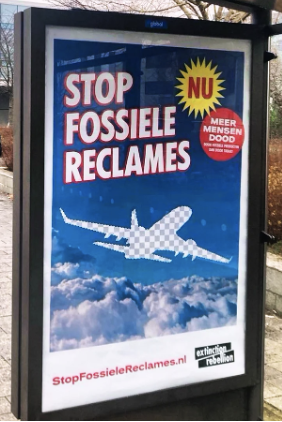
On January 23rd, Rebels in the Netherlands performed a massive undertaking – they replaced 700 bus shelter advertisements with posters demanding an end to fossil fuel advertising and business as usual. Learn more about their action here and follow @xrfryslan for more updates.
February 2026 | XR UK
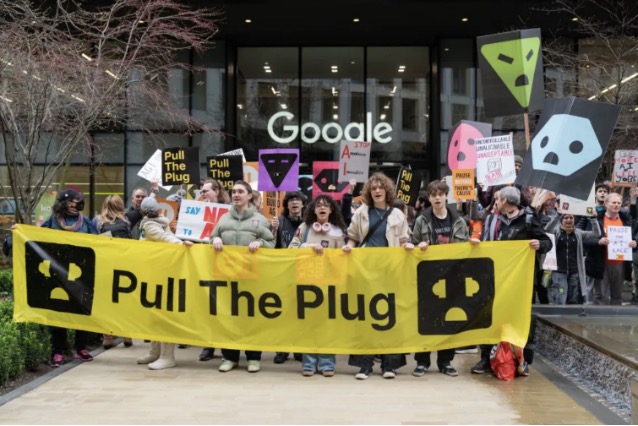
Photo: XR UK
In February 2026, nearly 300 people gathered outside the offices of OpenAI in London for the UK’s first ever anti-Artificial Intelligence march, titled “March Against the Machines.” The demonstration is already being described as the largest public protest focused on AI globally to date. The march was organised by a coalition of civil society groups, including Pull the Plug, PauseAI UK, Mad Youth Organize, Blaksox, and Assemble. Participants gathered to express growing public concern about how AI is being developed, governed, and deployed, particularly by some of the world’s most powerful technology companies. From OpenAI’s offices, protesters marched through central London, stopping at the offices of Google UK, Google DeepMind, and Meta. The route symbolically highlighted the concentration of AI power in a handful of large corporations whose technologies increasingly shape economies, governance systems, and everyday life. Read more about the demonstration here and here.
Positive News
Reducing Construction Emission
Alternative building materials are essential for reducing carbon emissions of the construction industry. “Rammed earth” is a building method that uses locally-sourced compressed soil instead of high-emissions materials like concrete. The use of rammed earth in building presents a pathway to reduce the greenhouse gas emissions of the third largest source of global emissions – the construction industry. Read this article to learn about the development of rammed-earth building.
Must Read
Fossil fuels, war, petrostates, ecocide, social injustice. It’s all connected in the worst way, as this article from EuroNews highlights: ‘A world chained to fossil fuels’: Does the war on Iran prove it’s time to quit oil for good?
Book Review
"Disasterology" by Samantha Montano
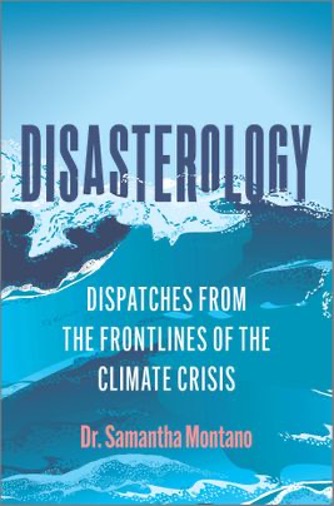
Disasterology is that rare book that works both as a serious exploration of a scholarly topic and as a story about somebody's life. The topic is what humans do before, during, and after big events, such as floods or fires, to make things either worse or better. The official term is “disaster management,” but as that tends to confuse friends at parties, people in the field have taken to calling it “disasterology.” The life is that of the author, Samantha Montano, who, as a teen, volunteered to help with the recovery after Hurricane Katrina and more or less just kept going.
Climate change is the backdrop, the context, explicitly acknowledged in every part of the story, although Montano's focus is not on emissions and sequestration but on dealing with the disasters that result. It's well-written, engaging, informative, with a list of practical steps at the end that readers can take in their own communities—these aren't “little steps that add up,” like changing light-bulbs, either. It's the nuts and bolts of community organizing, and it can save lives.
Quick Watch
You Told Us To Talk About The Weather - Climate Short
“In the past 6 hours, 94% of BRITS have spoken about the weather. In the past 5 years, 7000 Brits have been arrested for speaking out about the climate crisis.” Narrated by Michael Sheen, this 5 minute video is a dark and poetic exploration of climate anxiety.
Film Launch
The Cost of Growth is a 90-minute documentary about communities that are resisting extraction, building solidarities, and exposing the violence behind Europe’s economic systems. Featuring well-known names like Greta Thunberg and Jason Hickel, the film is a non-profit project. Although not yet available online, the producers are looking for groups who can organize screenings, online or in person. Find out more here. A screening toolkit is available.
Rebel with your wallet
Readers!
Forward this newsletter to a friend. If this was forwarded to you, join us and subscribe to the XR Global Newsletter. If you have any questions or feedback, we want to hear from you. Get in touch at xr-newsletter@protonmail.com
P.S. Want to take action?Make a donation to help power the rebellion!